
The Onyx Gas Energy Procurement Process: Strategic Sourcing For a Volatile Market
Purchasing electricity to achieve satisfactory results can be challenging. With numerous market options available, it’s easy to get confused and select something that isn’t the ideal choice for our company. Should we consider SPOT purchases, tranche purchases, or corporate/virtual PPA models? What about hybrids? Should we focus on base and peak purchasing? Should we buy in MW, percentages, or MWh? Onyx brings you the best energy procurement model for your company.
Selecting the appropriate model depends on the unique needs and characteristics of the company, as well as its energy consumption. Most importantly, it should stem from a carefully considered and executed long-term strategy for energy procurement solutions. This article will examine the distinctions between the most frequently used energy purchase models —purchasing in tranches shown as percentages (%) and in megawatts (MW) —and explore situations where each might be more beneficial.
Energy Procurement Solutions: Purchase Model in Megawatts
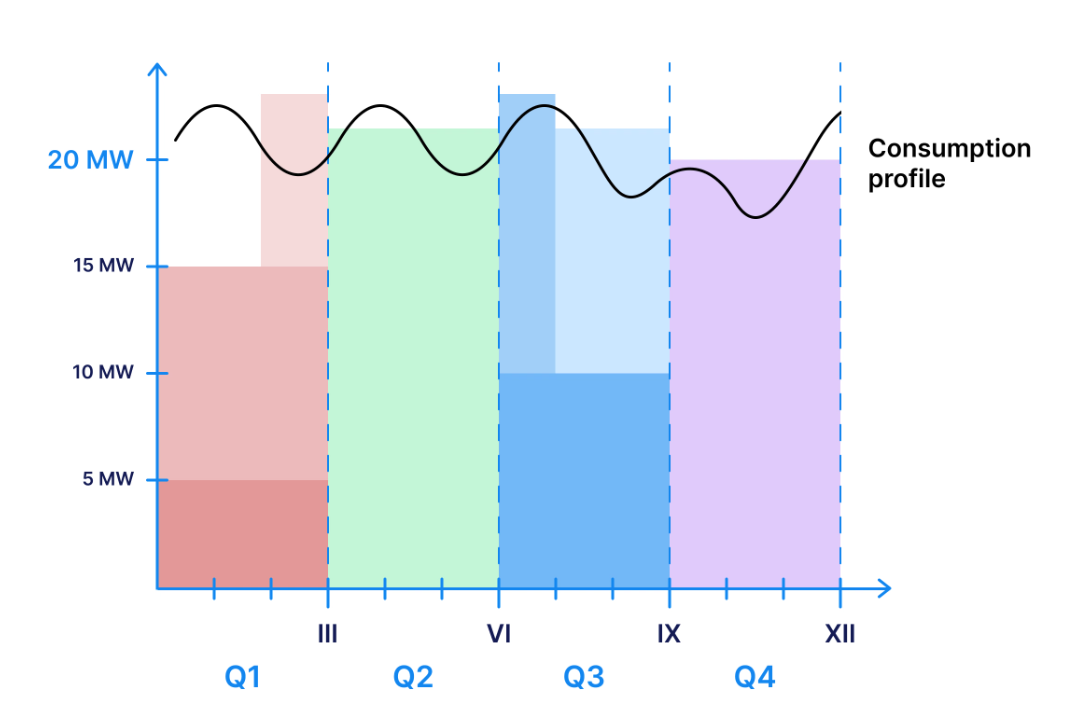
In the Megawatt model, purchasing energy involves acquiring a fixed volume of power, measured in megawatts, each hour over a designated time frame.
Any differences from the actual energy consumption will be adjusted according to spot (Day-Ahead Market) or balancing market prices. Thus, it should be expected that a part of the energy will always be procured or settled at SPOT or Balancing Market prices. The final energy price will only be known after the delivery period ends (for example, in February, the price for January will be revealed).
The megawatt (MW) purchase model benefits large energy consumers like manufacturing firms or other businesses with consistent energy usage. Lower baseload prices compared to peak load prices mean that energy suppliers won’t transfer the costs of our consumption profile to us.
Additionally, when evaluating purchases through the corporate/virtual Power Purchase Agreement (c/v PPA) model—a key component of modern energy procurement solutions—securing energy prices through MW purchases simplifies the process, as it ensures a locked-in price for a specified volume of energy over a defined duration.
Related Content: Energy Procurement Solutions and Strategies to Manage Operative Costs
Energy Procurement Solutions: Buying Tranches in Percentage Model (%)
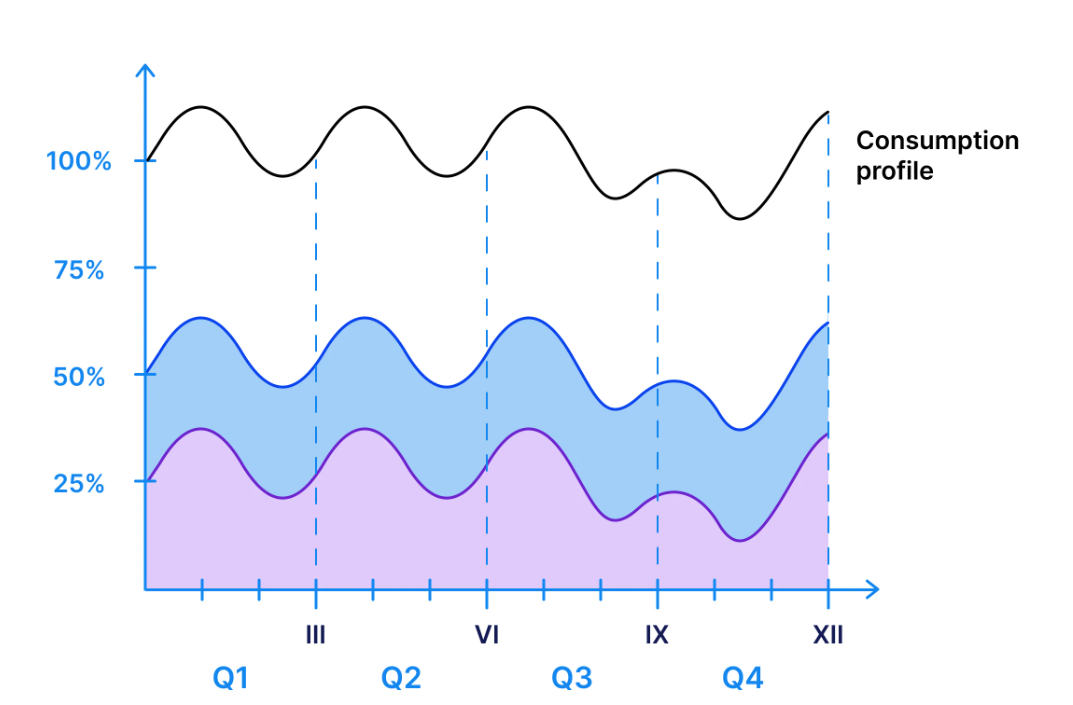
The percentage model for purchasing energy in tranches entails locking in the price of a portion of energy demand over a specified timeframe. Instead of securing a fixed power price for every hour as seen in the megawatt (MW) model, customers base their pricing on a percentage of their projected future demand. This percentage price hedging model benefits both small and large energy consumers, where budget predictability and price stability throughout the contract term are essential. To provide this certainty in pricing, energy suppliers often incur higher costs, as they must accommodate the variability in customer demand.
The percentage model proves advantageous for companies with fluctuating or unpredictable energy requirements, making it a versatile option in energy procurement solutions.
Organizations prioritizing budget stability and consistent energy prices may find themselves willing to accept a higher markup in supplier pricing. For instance, a service company reliant on its workforce count and seasonal project variations can gain from this percentage energy purchasing approach. During peak months with increased energy needs, due to busy project schedules, the company consumes more energy but pays a predetermined price relative to its demand. Conversely, in months of lower energy usage, the secured price corresponds to a fraction of their actual, reduced consumption.
Related content: What You Need to Know About an Energy Audit
The Best Energy Purchase Model for Businesses
In principle, choosing to offer to purchase energy in tranches, whether in megawatts (MW) or percentage tranches (%), provides considerable opportunities to manage purchase risk. In both cases, spreading the risk over time can provide some benefit. However, it is essential to consider that the choice of an appropriate energy purchase model depends on the specific needs of the company and its energy consumption characteristics.
The percentage model gives a sense of greater stability in the cost (price) of energy. There is more certainty about the implementation of the energy budget, especially with future energy consumption that is difficult to estimate. Unfortunately, for this price stability, you have to pay more in relation to the purchase of Megawatt bands.
Megawatt purchases give lower mark-ups in the offers of energy suppliers; however, it is more challenging to achieve budget certainty, among other things, due to the significant influence of spot prices or balancing market prices on the final energy price.
Selecting the right energy procurement solutions can significantly affect a company’s operating costs and budget. Careful analysis of consumption patterns, risk appetite, and long-term goals is essential before making a decision.
Our Partners




















Contact Onyx
Contact us today at (877) 669-7422 for proven energy management services that lower the cost of powering your home or business.
