To Texas business owners, energy is often considered another monthly bill to pay. But behind that single number is a market shifting every day. Political decisions, new tech, and market trends all trigger a butterfly effect on your bottom line. Our Onyx Electric and Gas specialists spend their days decoding these shifts. Today, we’re sharing what they look at and how it shapes smarter decisions for your business
Market Intelligence: Predicting What’s Best for Your Business
Every business that buys electricity or natural gas is exposed to a market it didn’t create. Energy market intelligence, often shortened to EMI, is how our specialists watch that market closely and turn what it shows into a buying decision. Experience and studies work as a filter here; data is everywhere these days. For the same reason, what is important nowadays is to understand which data actually matters.
Onyx electric and gas analysts follow forward curves, regional price differences, capacity auction results, and regulatory changes, then ask what each one means for a specific purchase. The main questions are whether to sign a contract now or wait, and whether to commit for a short or long term. Good EMI answers those questions. A plain weekly price report does not.
⛽ Read more: Market Intelligence
Reading The News in Not Enough: A Case Study
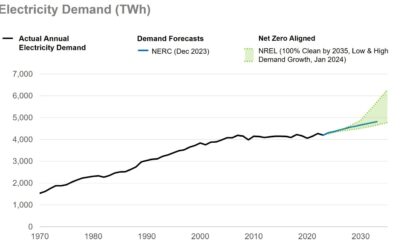
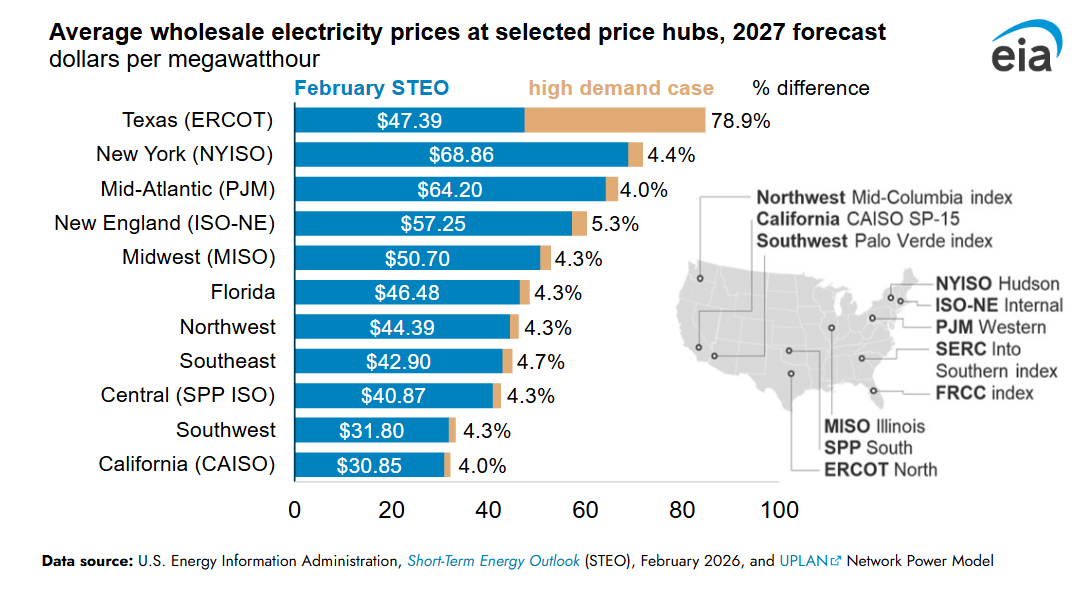
The best way to see market intelligence at work is to follow one story from headline to decision. Data centers are a good place to start, because they are the main reason forecasters expect Texas electricity demand to grow so quickly. EIA lists data center growth as the main driver of rising U.S. electricity demand.
The policy response has unfolded in steps. In June, Governor Abbott ordered regulators to make data centers pay for the electric infrastructure built to serve them. On August 3, he paused new data center grid connections pending an audit, and on September 21 he told the TCEQ to halt environmental permits for data centers as well. At stake is a queue of about 474 GW of connection requests, more than five times the state’s record peak demand, with roughly 90% coming from data centers.
Why does this matter to a bakery or a machine shop?
Well, because demand forecasts drive price expectations. After the August 3 pause, EIA cut its forecast for Texas load growth in 2027 from 14% to 6%. Nobody yet knows how much of that queue will be built, so our specialists treat the outcome as a range. (They also mark the dates that could shift it, such as ERCOT’s audit results, and check how each scenario would affect a client’s contract).
The practical takeaway is that policy news can change the market’s direction within weeks. A business that signed a long-term fixed rate before the pause and one that is about to renew now face different questions, and the headline alone can’t separate them.
⛽ Read more: How to Tell If Your Business Needs Energy Consulting in Texas
Putting the Questions to Work: The Texas Data Center Pause
Before our specialists decide that a story is important, they run it through a series of questions, so the process doesn’t depend on whichever headline is loudest that week.
Here is the framework in plain terms:
- What exactly changed? Is it a confirmed fact, like a new rule, or a forecast that could move?
- What does it touch? Does it affect supply, demand, or the rules of the market?
- How big and how soon? A change that lands in two years calls for a different response than one that lands next quarter.
- Who is exposed? The same event hits a fixed-rate customer, an indexed customer, and a business that is about to renew in different ways.
- What decision does it change? If the answer is none, the story is background, and we move on.
This example is a surface-level analysis. We kept it short so it’s easy to follow. A real review would involve much more, such as detailed forward pricing, a client’s hourly usage data, and the specific terms of their contract.
The example also shows why a single forecast is a weak foundation. Nobody knows yet how much of the queue will be built, so a careful analyst works with a range of outcomes and updates it as new information arrives. Market intelligence won’t tell you what prices will be. It helps you make decisions that hold up across the outcomes that are plausible.
⛽ Read more: Data Centers in Texas: Balancing High-Demand AI with Onyx Electric Solutions
FAQ
Is market intelligence the same as predicting energy prices?
No. Nobody can say exactly where prices will go. EMI works with ranges of possible outcomes, so decisions hold up even when the forecast changes.
What do Onyx electric and gas specialists look at?
They follow forward curves, regional price differences, capacity auction results, and regulatory changes. For each one, they ask what it means for a specific purchase.
When is the right time to sign an energy contract?
There is no single right date for every business. The answer depends on your renewal date, how your rate is structured, and where the market stands compared with its recent range. A specialist weighs those together instead of relying on a calendar rule.
Do I need market intelligence if my contract is already fixed?
A fixed rate protects you for the term, but it ends eventually. Market intelligence helps you plan the renewal in advance, so you aren’t choosing under time pressure.
Onyx Electric: Specialized Consulting for Long-Term Energy Solutions
Onyx Power & Gas helps businesses understand how they use energy and how the market affects what they pay. Our market intelligence services give companies a clearer picture of their current consumption and the options available to them, so they can plan beyond the next bill.
Our consultants work with each client to build a strategy that fits their goals and market conditions. That can include reviewing contract structures, checking renewal timing, and putting energy efficiency measures in place. If you’d like a second opinion on your current setup, contact our team.
Sources
- Electric Reliability Council of Texas (ERCOT) — Load Forecast
- Office of the Texas Governor — Governor Abbott Announces PUC and ERCOT Actions Protecting Residential Ratepayers from Data Center Costs
- Office of the Texas Governor — Governor Abbott Directs TCEQ to Halt Data Center Permits
- U.S. Energy Information Administration (EIA) — EIA Expects Highest Natural Gas Inventories in a Decade Heading into Winter
- U.S. Energy Information Administration (EIA) — Fossil Generation Could Rise with Faster-Than-Expected Growth in Data Center Power Demand
- U.S. Energy Information Administration (EIA) — Short-Term Energy Outlook